Review: Go Ask Your Dad Mother’s Day SVG for Embroidery
As a designer who has spent countless hours digitizing and testing files for real-world production, I approach every new asset with a critical eye. We often see digital files marketed broadly for Crafts and Graphics, but the transition from a screen to a needle is where the true test lies. Recently, I evaluated the Go Ask Your Dad, Mother s Day SVG to determine its viability for professional embroidery projects. This isn’t just about whether the file opens correctly; it is about how the design behaves under the needle, how it translates to fabric, and whether it holds up in a commercial setting.
First Impressions and Visual Personality
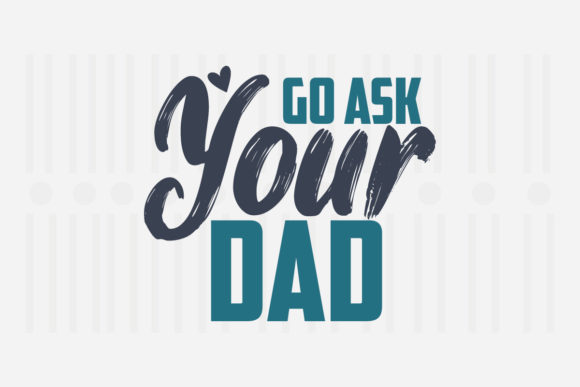
The phrase "Go Ask Your Dad" carries a specific cultural weight, especially around Mother’s Day. It taps into that humorous, relatable dynamic many families share. Visually, the design relies heavily on typography. For an embroidery designer, text-based designs are deceptively complex. The mood here is playful yet bold. The layout suggests a design meant to be read quickly, which is crucial for items like tote bags or caps where the viewer might only glance at the product for a second.
When I first loaded the SVG file into my editing software, I looked immediately at the node structure. Since this is provided as a vector graphic rather than a pre-digitized stitch file, the responsibility falls on the creator to convert it properly. The clean lines of the SVG suggest that it will digitize well, provided you avoid overly thin strokes that cannot hold a stitch. The visual personality is modern and casual, making it a strong candidate for contemporary custom apparel rather than traditional, ornate heirloom pieces.
Real-World Application: The Tote Bag Test
To understand how this design performs, I simulated a real-life scenario: creating a batch of canvas tote bags for a local spring market. Canvas is a sturdy fabric, but it has a distinct texture that can interfere with small details. I imagined placing the Go Ask Your Dad, Mother s Day SVG on the front panel of a natural-colored cotton tote.
In this context, the design shines. The bold lettering stands out against the weave of the canvas. However, because the source file is a vector graphic intended for printing or cutting, I had to consider how to translate those solid shapes into thread. A solid fill stitch might be too dense for a lightweight canvas, causing puckering. Instead, I would recommend using a combination of satin stitch for smaller elements and a textured fill for larger letters to reduce density while maintaining coverage. This approach ensures the finished product remains flexible and durable, essential for a bag that will carry groceries or books.
Navigating Fabric and Stitch Challenges
One of the most critical aspects of using a graphic-based SVG for embroidery is understanding fabric limitations. If you plan to use this design on a sweatshirt embroidery project, the plush texture of fleece or French terry can swallow thin lines. You must ensure that the minimum stroke width in your digitized version is at least 3mm to remain visible. On stretchy fabrics, such as jersey knits used for t-shirts, stabilization is non-negotiable. Without a proper cut-away stabilizer, the tension from the stitching will distort the humorous message, ruining the comedic timing of the quote.
Dark fabrics present another challenge. The description notes that the file is "100 Color Changeable," which is a significant advantage. For dark garments, you cannot rely on the fabric color to provide contrast. You must select high-visibility thread colors. A bright white or neon yellow thread against a navy or black shirt ensures readability. Conversely, on light fabrics, you have more freedom, but you must still check for shadowing effects if using multiple layers of stitching.
Commercial Viability for Etsy Sellers and Makers
For Etsy sellers and small shop owners, time is money. The fact that this asset comes in both EPS and SVG formats at 300dpi means it is versatile. While we are focusing on embroidery, the ability to use the same design for printable mockups or sublimation mugs allows for cohesive branding across a product line. Imagine offering a matching set: an embroidered apron for the mom and a printed mug with the same design. This cross-category utility increases the perceived value of your craft business offerings.
However, commercial use requires diligence. Before listing this as a personalized gift or holiday embroidery item, verify the licensing terms associated with the specific download. Most SVG creators allow for physical end-products, but restrictions may apply to digital resale. Always confirm that you are compliant with intellectual property rights to protect your small shop product listings from takedowns.
Technical Notes for the Embroidery Designer
If you are converting this SVG into a machine embroidery design, keep these practical tips in mind:
- Test on Scrap Fabric: Never run a new text-based design directly on customer goods. Stitch it out on the same type of fabric to check for registration issues.
- Check Stitch Density: Vector files do not have inherent stitch density. When digitizing, avoid packing stitches too tightly, which can cause thread breaks or fabric distortion.
- Hoop Size Considerations: Ensure the design fits comfortably within your hoop size with adequate margin for the frame. A cramped design looks unprofessional.
- Contrast Testing: View your digitized preview in black and white. If the letters blend into the background in monochrome, they will likely lack definition when stitched.
- Corner Details: Sharp corners in SVG fonts can become bulky in embroidery. Use underlay stitches effectively to anchor the top stitching and maintain crisp edges.
Final Verdict on Design Assets
The Go Ask Your Dad, Mother s Day SVG is a strong contender for makers looking to add humor to their handmade product lineup. It is not a plug-and-play embroidery file in the traditional sense, but rather a high-quality design asset that requires skilled digitization. For experienced designers, this offers creative freedom to tailor the stitch types to specific fabrics. For beginners, it serves as a reminder that great embroidery starts with great source files, but ends with thoughtful technical execution.
Whether you are creating an embroidered patch for a jacket or a large statement piece on a tote bag design, this graphic provides a solid foundation. Just remember to respect the material constraints, choose your thread colors wisely, and always prioritize the durability of the finished product. With careful attention to detail, this design can become a bestseller in your commercial embroidery portfolio.