Review: ONE CAT JUST LEADS to ANOTHER SVG for Embroidery
As a designer who has spent countless hours digitizing and testing files for real-world production, I approach every new asset with a critical eye. We often see Graphics marketed as "embroidery-ready," but the gap between a vector image and a stitched finished product can be wide. Recently, I evaluated the ONE CAT JUST LEADS to ANOTHER SVG to determine its viability for professional use. This isn't just about whether the file opens; it is about how it behaves under the needle, how it translates to fabric, and whether it holds up in a commercial craft business environment.
First Impressions and Visual Personality
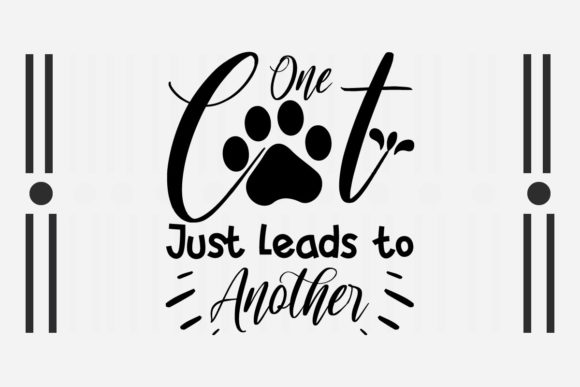
The phrase "One cat just leads to another" carries a specific mood: playful, relatable, and slightly chaotic in the way only cat owners understand. Visually, this design relies heavily on typography and simple iconography. When I first loaded the Source File eps or svg FILE INCLUDED, I looked immediately at the line weights and spacing. For embroidery, clean lines are non-negotiable. Complex gradients or thin, wispy strokes often disappear or cause thread breaks. This design appears to favor bold, clear shapes, which is a positive sign for stitchability.
The layout suggests a horizontal orientation, making it ideal for chest placements on custom apparel or centered designs on tote bag design projects. The visual personality is casual and modern, fitting well within the current trend of minimalist pet-themed decor. It does not scream for attention with excessive detail, which actually works in its favor for machine embroidery, where less is often more durable.
Real-World Application: The Tote Bag Test
To truly judge a design, you must imagine it on a physical item. I visualized this piece on a heavy canvas tote bag, a popular item for Etsy seller shops and boutique markets. The concept was simple: a sturdy, natural-colored bag with the quote stitched in a contrasting dark thread. Because the design is described as having 100 Color Changeable options, I could easily adapt the thread palette to match seasonal trends or brand colors.
In this scenario, the simplicity of the ONE CAT JUST LEADS to ANOTHER SVG shines. On textured fabrics like canvas or linen, highly detailed applique design elements can get lost. However, a strong typographic statement remains legible. The "cat" element, likely a silhouette or simple outline, would benefit from a solid fill stitch or a dense satin stitch border to ensure it pops against the fabric weave. This makes it an excellent candidate for a personalized gift that feels high-end rather than homemade.
Performance Across Different Products
Beyond tote bags, this design has versatility. For sweatshirt embroidery, the softness of fleece requires careful consideration of stitch density. If the digital file is too dense, it can cause puckering. Since this is provided as an SVG and EPS, the end-user or digitizer must ensure the conversion to a machine embroidery design accounts for fabric stretch. I would recommend using a cut-away stabilizer for knit fabrics to maintain shape integrity.
For baby embroidery projects, such as onesies or bibs, the scale becomes critical. The text must remain readable when scaled down. If the original vector allows for easy resizing without losing clarity, this design could work for small hoop sizes. However, one must be cautious with tiny lettering. If the font strokes are too thin, they may require a running stitch outline rather than a fill, which changes the aesthetic significantly. Testing on scrap fabric is essential here to verify that the letters do not merge together during stitching.
Consider also its use on embroidered patch creations. Patches are often washed frequently and subjected to wear. A design with clear boundaries and minimal fine details, like this one, tends to hold up better over time. It creates a durable handmade product that customers trust will last.
Technical Considerations for Designers
While the product description highlights that it is Ready to print and includes vector formats, embroidery designers must remember that SVGs are not native embroidery files. You cannot simply load an SVG into most embroidery machines. This file serves as the foundation for digitizing. You will need to convert it using software that allows you to define stitch types, angles, and densities.
Key technical checks include:
- Stitch Density: Ensure the cat shape and text are not over-digitized. Too many stitches per square inch can cause thread breaks and fabric distortion.
- Thread Colors: Use the Possible and easy change color feature to test contrast. A light thread on a dark fabric texture may require an underlay stitch to prevent the background from showing through.
- Hoop Size: Confirm the dimensions fit your available hoops. A wide horizontal design might require a 5x7 or larger hoop, limiting its use on smaller items like caps unless broken into parts.
- Small Details: Inspect any whiskers or tail details. If they are thinner than 2mm, they may need to be simplified or removed for reliable stitching.
Commercial Viability and Brand Consistency
For small shop product lines, consistency is key. This design offers a cohesive look that can be part of a broader pet-themed collection. Its neutral tone allows it to fit into various branding styles, from rustic to modern chic. When creating printable mockup images for online listings, the clean lines of the SVG make it easy to visualize on different backgrounds, enhancing buyer engagement.
However, commercial use requires diligence. Before selling commercial embroidery items made with this design, verify the license terms associated with the digital embroidery file purchase. While the file is included, the rights to sell finished goods may vary. Always clarify if the license covers unlimited sales or if there are restrictions.
Final Verdict
The ONE CAT JUST LEADS to ANOTHER SVG is a strong contender for designers looking for versatile, relatable content. It bridges the gap between cute and sophisticated, making it suitable for a wide range of Crafts applications. Its success in embroidery depends largely on proper digitizing and material selection. By respecting the limitations of thread and fabric, and by leveraging the flexibility of the vector source, you can create high-quality design assets that resonate with customers. Whether for a holiday embroidery gift or a year-round apparel decorators staple, this design holds promise for those willing to put in the technical prep work.