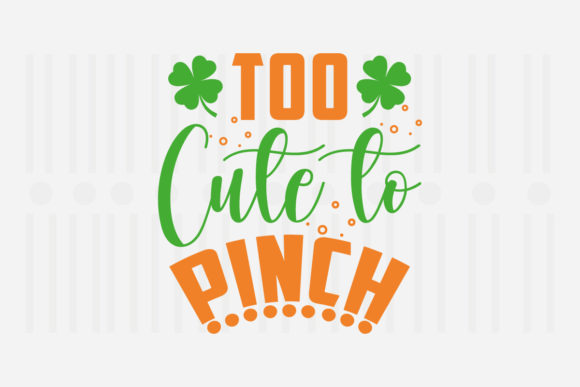
Review: Too Cute to Pinch St. Patrick’s SVG for Embroidery
As a designer who has spent countless hours digitizing and testing files for client projects, I have learned that not every graphic translates well into thread. When I first encountered Too Cute to Pinch, St. Patrick s Svg, my immediate reaction was one of cautious optimism. The phrase itself is playful, tapping into the whimsical spirit of St. Patrick’s Day without relying on the overused shamrock clichés that flood the market every March. However, seeing a vector image on a screen is vastly different from watching it stitch out on a textured cotton blend or a stretchy fleece. This review breaks down how this specific design asset performs when moved from the digital realm of Crafts and Graphics into the tangible world of machine embroidery.
First Impressions and Visual Personality
The mood of Too Cute to Pinch, St. Patrick s Svg is lighthearted and approachable. It does not scream for attention with aggressive boldness; instead, it invites a smile. For an embroidery project, this is crucial. Designs that are too dense or aggressive can feel heavy on garments, especially those intended for children or casual wear. The layout appears balanced, suggesting that if digitized correctly, it would sit comfortably on a chest pocket or the center of a tote bag. The visual personality is clean, which implies that the original vector paths are likely smooth. This is a good sign for embroidery because jagged vector lines often result in messy satin stitches or unnecessary node points that confuse the stitching sequence.
When evaluating this as a potential machine embroidery design, I look for simplicity in the lettering. Complex serifs or thin connectors often break under the tension of the needle. If this SVG maintains its integrity when scaled down, it suggests the font choice is robust enough for thread. The "cute" aspect likely comes from rounded edges or a playful typeface, which generally translates well into satin stitch borders or simple fill stitch areas without requiring excessive underlay that might cause puckering.
Real-World Application: The Custom Tote Scenario
To truly test the viability of Too Cute to Pinch, St. Patrick s Svg, I imagined a real-life scenario: preparing a batch of custom embroidered tote bags for a local boutique’s holiday promotion. Tote bags are typically made from canvas or heavy cotton, which provides a stable base for embroidery. In this context, the design needs to be legible from a distance but detailed enough to justify the handmade price point.
If I were using this file, I would first convert the SVG into an embroidery format using my preferred software. Since the product description notes it is a Source File eps or svg, I have the flexibility to adjust colors easily. For a St. Patrick’s theme, I might choose a vibrant kelly green for the text and a contrasting white or gold for any accent elements. The ability to make 100 Color Changeable adjustments means I can tailor the thread colors to match the specific fabric of the tote. On a natural beige canvas, a deep green stands out beautifully, creating a high-value handmade product that feels premium rather than mass-produced.
However, the transition from SVG to stitch requires careful attention to stitch density. If the original graphic has large solid areas, I would need to ensure the digitized version uses appropriate fill patterns to prevent the fabric from pulling. For a tote bag, durability is key, so I would opt for a slightly higher density to ensure the design withstands frequent washing and heavy use. This is where the "Ready to print" nature of the SVG helps me visualize the final output, but it does not replace the need for proper digitizing or purchasing a pre-digitized embroidery file if one is available.
Navigating Fabric and Hoop Constraints
While Too Cute to Pinch, St. Patrick s Svg shines on stable fabrics like canvas or denim, it requires caution on other materials. For instance, if you plan to use this on a sweatshirt embroidery project, the texture of the fleece can swallow small details. If the lettering in the SVG is thin, it might get lost in the pile of the fabric. In such cases, I recommend using a running stitch outline or a slightly bolder font weight if you have the ability to edit the vector before digitizing.
Another critical consideration is the hoop size. If you are working with a 4x4 inch hoop, you must ensure the design fits comfortably within the margins without hitting the hoop edges. Curved surfaces, such as caps or baby hats, present additional challenges. The curvature can distort the design, making straight lines appear bent. For a baby embroidery item, such as a onesie, the design must be small enough to fit on the chest but large enough to remain readable. I would advise testing the design on scrap fabric first, using the same stabilizer and thread types you intend to use for the final product. This step is non-negotiable for professional results.
Dark fabrics also pose a challenge. If you are embroidering on a black shirt, the green text might not pop unless you use a bright, high-contrast thread. Additionally, you may need to add a white underlay or background patch to ensure visibility. This is where the versatility of the SVG format is beneficial, allowing you to preview color combinations digitally before committing to thread.
Commercial Viability and Brand Consistency
For Etsy sellers and small shop product creators, the appeal of Too Cute to Pinch, St. Patrick s Svg lies in its commercial potential. Holiday-themed items sell well, but only if they look professional. A sloppy embroidery job can damage brand trust, while a crisp, well-executed design enhances perceived value. This design, with its clear message and playful tone, fits well into a lineup of personalized gift items. It appeals to parents looking for cute outfits for their children or adults wanting a fun, festive shirt for pub crawls or family gatherings.
When using this as a digital embroidery file or as a basis for creating one, it is essential to confirm licensing terms. Just because an SVG is labeled for crafts does not automatically grant rights for commercial embroidery sales. Always verify whether the license allows for selling finished physical items. Assuming the rights are cleared, this design can be a strong addition to your design assets library. It can be used across various products, from embroidered patches to kitchen towels, providing consistency in your holiday collection.
Practical Designer Notes for Best Results
To get the most out of Too Cute to Pinch, St. Patrick s Svg, follow these practical steps:
- Test on Scrap Fabric: Always stitch a sample on the same material you will use for the final product. This reveals issues with tension, puckering, or thread breaks.
- Check Thread Contrast: Use a color wheel to select threads that stand out against your fabric. High contrast improves readability and visual appeal.
- Review Stitch Density: If digitizing yourself, ensure the density is appropriate for the fabric weight. Too dense, and the fabric will pucker; too sparse, and the backing will show through.
- Confirm Hoop Size: Measure the design dimensions against your hoop capacity. Leave at least half an inch of margin on all sides.
- Inspect Small Details: Zoom in on the SVG to check for tiny elements that may not stitch well. Simplify if necessary.
- Use Proper Stabilizer: Choose a cut-away stabilizer for stretchy fabrics and tear-away for stable woven fabrics to support the stitches during and after embroidery.
- Verify Licensing: Before selling any finished product or commercial embroidery items, read the license agreement associated with the SVG file to ensure compliance.
In conclusion, Too Cute to Pinch, St. Patrick s Svg offers a charming foundation for festive embroidery projects. Its success depends largely on the skill of the digitizer and the care taken in material selection. By treating it with the respect due to any professional embroidery project, you can create items that delight customers and elevate your craft business. Whether for a holiday embroidery gift or a boutique bestseller, this design has the potential to stitch up beautifully when handled with expertise.